Healthy Recipes & Nutrition
Want to Lose Fat? Eat Fat.
Why eating the right fats can support weight loss — and what coconut butter, sugar, and cholesterol reveal about your metabolism.
Have We Been Blaming the Wrong Nutrient?
For decades, fat was the enemy. Supermarkets filled their shelves with low-fat products, often replacing fat with refined starches and added sugars. But here’s what the low-fat revolution overlooked: eating fat doesn’t automatically make you fat. Your body needs dietary fat to absorb essential vitamins, maintain healthy cells, produce hormones, and supply energy.
Weight management isn’t simply about avoiding fat. It’s about how much energy we consume, how satisfied we feel after eating, and the quality of the foods we choose. A diet containing healthy fats can be compatible with weight loss, particularly when it replaces highly processed foods and helps control hunger.
Why Coconut Butter Is Worth Discovering
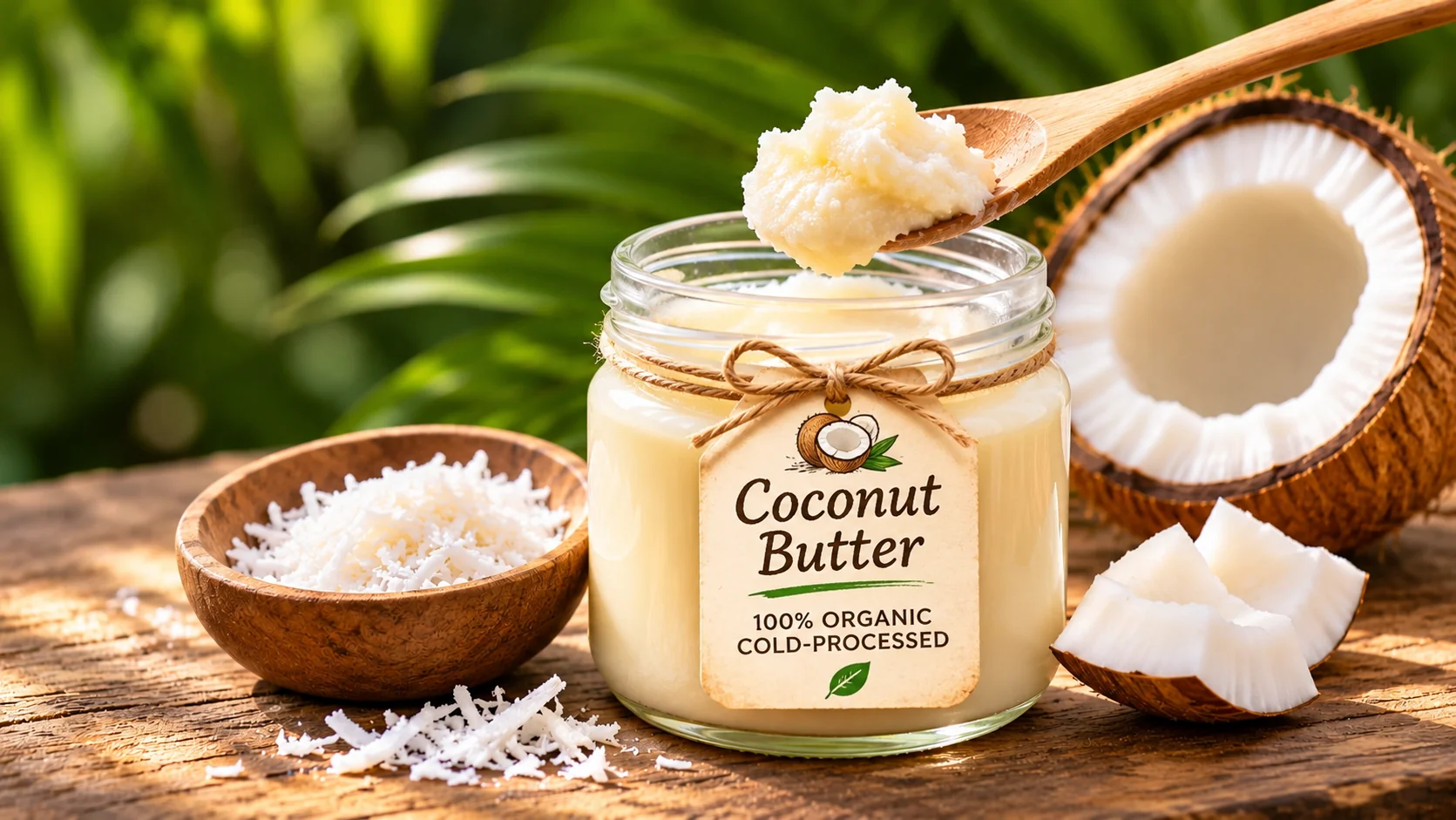
Unlike coconut oil, which consists almost entirely of extracted fat, coconut butter is made from whole ground coconut flesh. It retains some of the fruit’s natural fiber and minerals, along with a rich, creamy texture.
Coconut contains lauric acid and smaller amounts of other medium-chain fatty acids. Research published in the Journal of the Academy of Nutrition and Dietetics found that replacing long-chain fats with concentrated medium-chain triglycerides (MCTs) produced modest reductions in body weight and fat mass. Coconut butter isn’t equivalent to the MCT preparations studied, but it illustrates why different dietary fats deserve to be understood rather than treated as identical.
Its naturally sweet flavor also makes it an appealing ingredient for breakfasts and desserts without relying on added sugar.
Cholesterol: Your Body Makes It Even When You Don’t Eat It
Cholesterol has been portrayed as dangerous for so long that many people forget something fundamental: without cholesterol, we couldn’t survive. Our bodies use it to build cell membranes, manufacture hormones, produce vitamin D, and create bile acids that help digest fat.
Your liver produces cholesterol even when you consume none. It also adjusts its production partly in response to dietary intake. This is one reason dietary cholesterol and blood cholesterol aren’t interchangeable.
The 2015–2020 Dietary Guidelines for Americans removed the longstanding general limit of 300 milligrams of dietary cholesterol per day. That didn’t mean cholesterol became unlimited or risk-free. It reflected a more nuanced understanding of how diet affects cholesterol levels.
And here’s another distinction worth knowing: LDL and HDL aren’t two different types of cholesterol. They’re lipoproteins that transport it through the bloodstream. Cholesterol is essential, but persistently elevated LDL increases cardiovascular risk.
Sugar: The Other Side of the Cholesterol Story
For decades, fat took the blame while sugar escaped much of the scrutiny. But research reveals a different side of the story: excessive sugar consumption can change how the liver produces fat and how cholesterol-carrying particles circulate in the bloodstream.
The liver can use sugar-derived compounds to synthesize cholesterol. Excess fructose can also stimulate de novo lipogenesis, the process through which the liver produces fatty acids. These fats can be packaged into triglyceride-rich particles called VLDL, influencing the balance of lipoproteins circulating in the blood.
The evidence goes beyond theory. In a landmark 2009 study published in the Journal of Clinical Investigation, researchers at the University of California, Davis, found that consuming fructose-sweetened beverages providing 25% of daily calories increased LDL cholesterol, apolipoprotein B (ApoB), and small, dense LDL particles in overweight or obese adults. A subsequent 2011 clinical study also reported increases in LDL and ApoB following consumption of fructose- and high-fructose corn syrup-sweetened beverages, again at an intake equivalent to 25% of daily calories.
These findings matter because ApoB reflects the number of potentially artery-damaging lipoprotein particles. A diet overloaded with added sugars can therefore affect cardiovascular health in ways that go well beyond blood sugar alone.
This doesn’t make all carbohydrates unhealthy. Whole grains, legumes, vegetables, and fiber-rich foods have different metabolic effects from sugary drinks and heavily refined products. The concern is the repeated, excessive consumption of added sugars and refined carbohydrates, especially within a calorie-rich diet.
The cholesterol in your food isn’t the only thing that matters. What your liver does with the sugar you consume matters, too.
Not All Fats Are Created Equal
Olive oil, nuts, eggs, dairy products, and coconut butter contain different combinations of nutrients and fatty acids. Their effects depend on the food itself, the amount consumed, and the overall dietary pattern.
Coconut butter contains saturated fat but, like other plant foods, naturally contains no cholesterol. That distinction matters: dietary cholesterol and saturated fat aren’t the same substance. Research also shows that replacing saturated fats with unsaturated fats generally lowers LDL cholesterol, while a 2020 meta-analysis published in Circulation found that coconut oil increased LDL compared with non-tropical vegetable oils.
The goal isn’t to eat unlimited fat. It’s to choose foods thoughtfully, understand their nutritional differences, and stop assuming that every fat-containing food is automatically unhealthy.
How to Enjoy Coconut Butter
Ideally, choose 100% organic, cold-processed coconut butter, made exclusively from coconut flesh, without added sugar, preservatives, or refined oils. Look for certified organic products, such as those carrying the USDA Organic seal, and check the processing method on the label.
Coconut butter works beautifully in simple meals. Stir a teaspoon into oatmeal, mix it with plain Greek yogurt and berries, or spread a little over whole-grain toast.
Make Your Own Coconut Butter
Ingredient: 3–4 cups of 100% organic, unsweetened dried shredded coconut.
Preparation: Place the coconut in a powerful food processor and blend for approximately 10–20 minutes, scraping down the sides as needed, until smooth and creamy. To minimize heating, blend in short intervals and allow the appliance to cool when necessary. Transfer to a clean, dry, airtight jar.
Storage: Refrigerate in a sealed container, always use a clean, dry spoon, and discard if any signs of spoilage appear. Coconut butter naturally firms up when cool; gently warm the closed jar in a bowl of warm water before serving.
The Bottom Line
Eating fat doesn’t automatically lead to weight gain, and avoiding it doesn’t guarantee weight loss. Dietary fats perform essential functions, while their effects on appetite, cholesterol, and metabolism depend on the types and amounts consumed.
Meanwhile, research has shown that excessive added sugar can influence liver fat production, triglycerides, and cholesterol-carrying particles. It’s a powerful reminder that nutrition is about more than the fat content printed on a label.
Coconut butter can be a delicious part of a balanced diet, even though it isn’t a shortcut to weight loss.
Want to lose fat? Don’t be afraid to eat fat. Be smarter about what you eat.
Sources & further reading
- Mumme & Stonehouse (2015), medium-chain triglycerides and weight loss
- Stanhope et al. (2009), fructose-sweetened beverages and lipids, Journal of Clinical Investigation
- Stanhope et al. (2011), fructose, HFCS, LDL and ApoB
- Endotext: The Effect of Diet on Cardiovascular Disease and Lipid and Lipoprotein Levels
- Neelakantan et al. (2020), coconut oil and cardiovascular risk factors
- Dietary Guidelines for Americans
Editorial note: This article is for general informational purposes only and is not a substitute for professional medical, psychological, or nutritional advice.